Golden arthouse films shot in Northern Italy don’t typically land at the Oscars, but in 2017, Call Me By Your Name did. Receiving four nominations at the 90th Academy Awards across Best Picture, Best Actor (Timothee Chalamet), Best Original Song (“Mystery of Love”) and Best Adapted Screenplay, Luca Guadagnino’s shimmering coming-of-age love story soared above both critical and fan expectations alike.
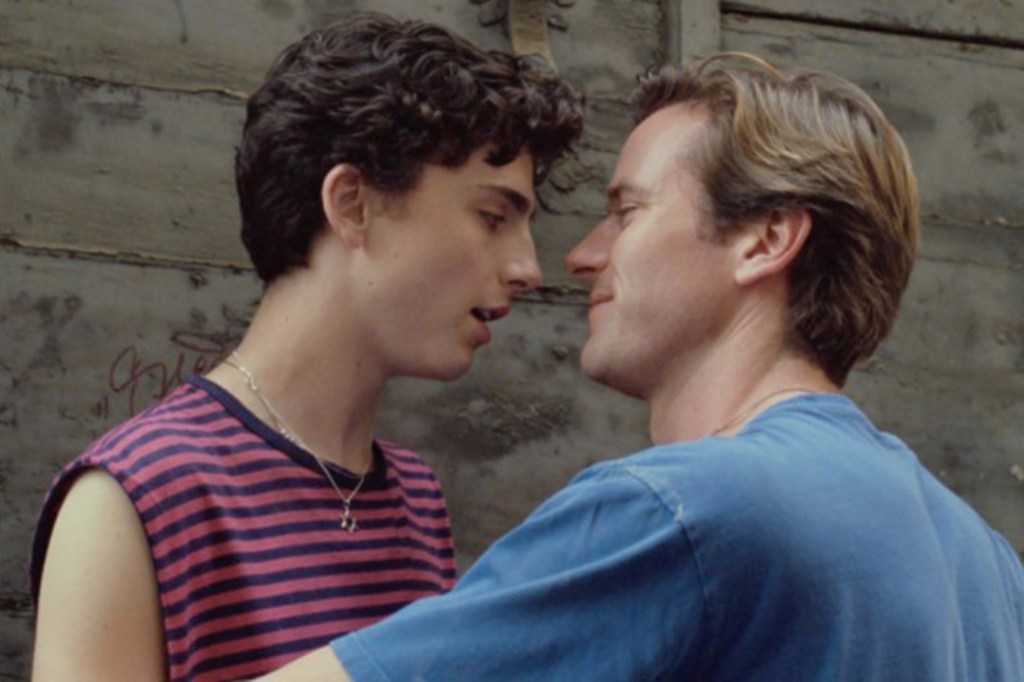
Call Me By Your Name is set in 1983 Crema, Italy and follows 17-year-old Elio Pearlman (Timothee Chalamet) through a lavish summer spent with an American university student, Oliver (Armie Hammer). The two become romantically involved and what ensues is a piercing tale of a euphoric first love. Notedly, Guadagnino captures CMBYN in its purity, creating an entirely uncynical homosexual plot.
CMBYN has always had a significant social media following. Queer film fan groups online, the LGBTQ+ community, and allies alike were highly anticipating the release of Call Me By Your Name – the film now gaining ‘cult’ status among queer arthouse cinema fans. This film doesn’t discriminate on who falls in love with it. In its very nature, the intended audience for Call Me By Your Name are those who can enjoy a good love story, irrespective of sexuality. It is through the lens of two gay men, but it speaks to the hearts of everyone, everywhere. Truly, there is no denying that CMBYN is a direct love-letter to LGBTQ+ people of all religions, cultures and ages.
To understand the cultural context of Call Me By Your Name (and appreciate the bliss of uncynical queer storytelling), one must understand the universal oppression of gay people in the 1980s, and the millennium leading up to that time. Homosexuality was taboo, while homophobia and related violence was normalised. Guardagnino purposely does not make heavy reference to the 80s and instead, offers a timeless cinematic experience that makes it easy for the modern viewer to follow.

Call Me By Your Name relates to the idea of cultural hybridisation as the film features many different cultural layers and takes a large stride away from mainstream cinema. Unlike a big Hollywood film, CMBYN was made in Italy, on a minuscule budget, in collaboration with small studios and producers across Italy and France. The languages spoken in the film are English, French and Italian. The score of the film varies from bass-heavy Europop to quaint piano compositions and classical pieces i.e Bach’s ‘BWV 992 IV: Postilion’s Aria: Allegro Poco’. The international success of CMBYN is not related to the concept of cultural proximity. While cultural proximity argues that people will gravitate toward media from their own culture, CMBYN proves that foreign films with unfamiliar elements are still appealing and interesting. CMBYN exists in the Global North divide.
References:
Brody, R., Schulman, M., Entous, A., Stack, M., James, C., Tolentino, J., Lane, A., Brody, R., Schulman, M. and Entous, A. (2017). The Empty, Sanitized Intimacy of “Call Me by Your Name”. [online] The New Yorker. Available at: https://www.newyorker.com/culture/richard-brody/the-empty-sanitized-intimacy-of-call-me-by-your-name [Accessed 23 Aug. 2019].
IMDb. (2017). Call Me by Your Name (2017) – IMDb. [online] Available at: https://www.imdb.com/title/tt5726616/ [Accessed 22 Aug. 2019].
Vogue. (2017). A Guide to the Enchanting Northern Italian Setting of Call Me by Your Name. [online] Available at: https://www.vogue.com/article/call-me-by-your-name-guide-to-northern-italy [Accessed 16 Aug. 2019].
 internet kid