Featured

Call Me By Your Name is love, Call Me By Your Name is life

Golden arthouse films shot in Northern Italy don’t typically land at the Oscars, but in 2017, Call Me By Your Name did. Receiving four nominations at the 90th Academy Awards across Best Picture, Best Actor (Timothee Chalamet), Best Original Song (“Mystery of Love”) and Best Adapted Screenplay, Luca Guadagnino’s shimmering coming-of-age love story soared above both critical and fan expectations alike. 
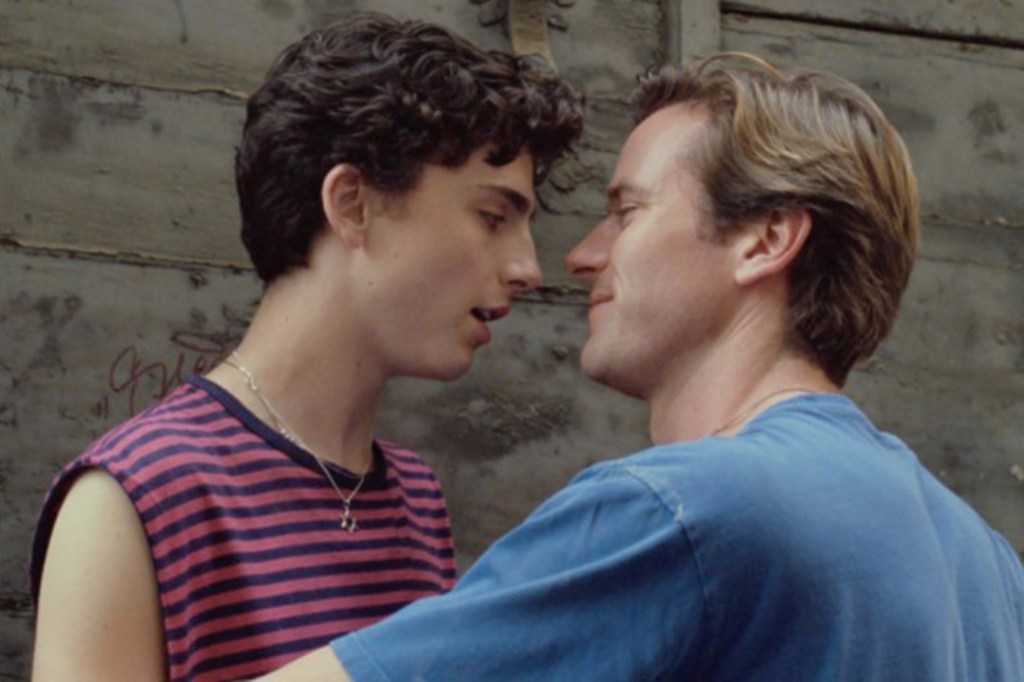
Call Me By Your Name is set in 1983 Crema, Italy and follows 17-year-old Elio Pearlman (Timothee Chalamet) through a lavish summer spent with an American university student, Oliver (Armie Hammer). The two become romantically involved and what ensues is a piercing tale of a euphoric first love. Notedly, Guadagnino captures CMBYN in its purity, creating an entirely uncynical homosexual plot. 

CMBYN has always had a significant social media following. Queer film fan groups online, the LGBTQ+ community, and allies alike were highly anticipating the release of Call Me By Your Name – the film now gaining ‘cult’ status among queer arthouse cinema fans. This film doesn’t discriminate on who falls in love with it. In its very nature, the intended audience for Call Me By Your Name are those who can enjoy a good love story, irrespective of sexuality. It is through the lens of two gay men, but it speaks to the hearts of everyone, everywhere. Truly, there is no denying that CMBYN is a direct love-letter to LGBTQ+ people of all religions, cultures and ages.

To understand the cultural context of Call Me By Your Name (and appreciate the bliss of uncynical queer storytelling), one must understand the universal oppression of gay people in the 1980s, and the millennium leading up to that time. Homosexuality was taboo, while homophobia and related violence was normalised. Guardagnino purposely does not make heavy reference to the 80s and instead, offers a timeless cinematic experience that makes it easy for the modern viewer to follow.

Call Me By Your Name relates to the idea of cultural hybridisation as the film features many different cultural layers and takes a large stride away from mainstream cinema. Unlike a big Hollywood film, CMBYN was made in Italy, on a minuscule budget, in collaboration with small studios and producers across Italy and France. The languages spoken in the film are English, French and Italian. The score of the film varies from bass-heavy Europop to quaint piano compositions and classical pieces i.e Bach’s ‘BWV 992 IV: Postilion’s Aria: Allegro Poco’. The international success of CMBYN is not related to the concept of cultural proximity. While cultural proximity argues that people will gravitate toward media from their own culture, CMBYN proves that foreign films with unfamiliar elements are still appealing and interesting. CMBYN exists in the Global North divide. 

References:

Brody, R., Schulman, M., Entous, A., Stack, M., James, C., Tolentino, J., Lane, A., Brody, R., Schulman, M. and Entous, A. (2017). The Empty, Sanitized Intimacy of “Call Me by Your Name”. [online] The New Yorker. Available at: https://www.newyorker.com/culture/richard-brody/the-empty-sanitized-intimacy-of-call-me-by-your-name [Accessed 23 Aug. 2019].

IMDb. (2017). Call Me by Your Name (2017) – IMDb. [online] Available at: https://www.imdb.com/title/tt5726616/ [Accessed 22 Aug. 2019].

Vogue. (2017). A Guide to the Enchanting Northern Italian Setting of Call Me by Your Name. [online] Available at: https://www.vogue.com/article/call-me-by-your-name-guide-to-northern-italy [Accessed 16 Aug. 2019].

Priscilla: Queen of the Queer Community, Saviour to Australian Film

Stephan Elliot’s 1994 iconic queer Australian film, ‘The Adventures of Priscilla, Queen of the Desert’ has left a monumental impact on both the Australian film industry and broader Australian culture. Being released the same year that homosexuality was legally decriminalised nationally (excluding Tasmania), it was extremely significant how the film in its nature embraced the wide scope of LGBTQ+ community through storytelling. Through promoting and providing a platform for all audiences to engage with queer film work, Priscilla ultimately contributed to a greater understanding and perception of the LGBTQ+ community in mid-90s in Australia; a historically difficult landscape for the queer community. Priscilla also highlighted issues of race in Australia to an international stage, sparking important conversations on Indigenous Australia and First Nations People. Priscilla celebrates quintessential Australian values including self-depreciation, blunt humour and determination in the face of adversity (The Guardian, 2014).

The impact of The Adventures of Priscilla, Queen of the Desert on the Australian film industry was highly significant. With only a budget of $2.7 million AUD, the earnings of the box office superseded all critical and internal predictions for the film, delivering $29.7 million. The success of Priscilla on an international level allowed Australian films that came after it to be more generously funded by Screen Australia.

Significant market failure has been majorly responsible for funding and the protection of content in the Australian market. This has been seen when an Australian film fails, and the incentive to increase funding from both government and non-government bodies is diminished. “The global market in which film productions take place is fickle, unpredictable and manipulable and prone to market failures…” (Marcus Breen) On the other hand, Priscilla’s success instilled a confidence in Australian films, thus Screen Australia’s gross annual funding for film development grew.

The revival of Australian film only took place with Gough Whitlam’s election as Prime Minister. Whitlam’s government founding the Australian Film and Television School in 1973 began the turn around for Australian cinema. In 1975, the Australian Film commission was set up.  For the first time, Australian filmmakers were guaranteed substantial financial backing. “The commission prioritised cultural and artistic merit over the prospect of economic success in their funding decisions.” (Ben Goldsmith, The Conversation)

In the 1970s, the Australian government introduced “10ba tax laws” to aid its struggling film industry. The introduction of his law allowed producers to claim subsidies for their in-development films, and in turn, the industry began to boom.

Without adequate funding, Australian films cannot be made to the best of their ability or quality. Only with the backing of the Australian Film Finance Corporation was Priscilla able to start production in 1993. From 1980 to 1988, “production budgets secured through 10BA totalled $959.7 million, an average of $120 million per year. A total of 896 projects were financed through 10BA during that time, including 227 feature films (or 92 per cent of Australian features produced in the period).” (Screen Australia)

Australian films like Priscilla, Queen of the Desert have allowed for an enormous positive societal impact on greater Australia. For some audience members, Priscilla is the first film to introduce them to ‘out’ or queer-identifying LGBTQ+ characters and storytelling. The impact and importance of LGBTQ+ representation always, but especially in a time where queer culture wasn’t the norm or traditionally respected, meant that films like Priscilla carry significant weight for the lives of countless LGBTQ+ identifying audience members and public. 

Works like Priscilla provide cultural benefits to the public and in actuality, instrumentally contribute to Australian identity and national ethos. Spanning over 80 years, the Australian film industry continues to flourish, especially with more and more international productions landing in Australia.

In reflection, the Australian made ‘The Adventures of Priscilla, Queen of the Desert’ has had a profound intergenerational impact on both the Australian film industry and broader Australian culture. The ever-changing nature of film funding is an unparalleled, crucial element to ensuring the continued production of hearty Australian films that challenge societal norms while complimenting existing culture.

References

Adair, C. (2019) Not supporting the Australian film and Television Industry? tell him he’s dreamin’, charisse adair. Available at: https://charisseaadair.wordpress.com/2019/08/23/not-supporting-the-australian-film-and-television-industry-tell-him-hes-dreamin/ (Accessed: 14 May 2023). 

Breen, M. Offshore Pot o’Gold: The Political Economy of the Australian Film Industry [Preprint]. 

Buckmaster, L. (2014) The Adventures of Priscilla, Queen of the Desert: Rewatching classic Australian films, The Guardian. Available at: https://www.theguardian.com/film/australia-culture-blog/2014/may/09/the-adventures-of-priscilla-queen-of-the-desert-rewatching-classic-australian-films (Accessed: 14 May 2023). 

Curtis, K. (2018) BCM 331 Australian content, Global Context, Kali’s Blog. Available at: https://kalicurtis.home.blog/bcm-331-australian-content-global-context/ (Accessed: 14 May 2023). 

Goldsmith, B. Senior Research Fellow. (2014) Australia’s film industry owes a debt to Gough Whitlam, The Conversation. Available at: https://theconversation.com/australias-film-industry-owes-a-debt-to-gough-whitlam-33240 (Accessed: 14 May 2023).

 Operation of 10BA – in the archive – production businesses – people and businesses – fact finders (no date) Screen Australia. Available at: https://www.screenaustralia.gov.au/fact-finders/people-and-businesses/production-businesses/in-the-archive/operation-of-10ba (Accessed: 14 May 2023). 

Sorensen, J. (2020) The landscape of pride in ‘The adventures of priscilla, queen of the Desert’, Screen Queens. Available at: https://screen-queens.com/2020/04/07/landscape-of-pride-in-the-adventures-of-priscilla-queen-of-the-desert/ (Accessed: 14 May 2023). 

Throsby, D. (no date) Feature Article – Public Funding of the Arts in Australia – 1900 to 2000 (feature article), Australian Bureau of Statistics. Available at: https://www.abs.gov.au/AUSSTATS/abs@.Nsf/Previousproducts/1301.0Feature%20Article302001?opendocument&tabname=Summary&prodno=1301.0&issue=2001&num=&view= (Accessed: 14 May 2023). 

Design a site like this with WordPress.com
Get started