#BCM212 Task 1 Research Proposal
Enshrined in the written bodies of tertiary institutions worldwide, are the promises made to keep students safe during their time at University. We know that the responsibility for the safety of a student is paramount, yet we see failings consistently. Inflating campus crime of a violent nature in Australia, as reflected in studies across the U.S, reveals that the Universities we faithfully attend, the culture we invest in and the society we subscribe to, are failing women. Female victims of crimes such as sexual violence on campus are not only at risk of grievous bodily and mental harm, but are left vulnerable to the complete compromise of their education. The deep-rooted fear some women carry whilst studying on campus can be detrimental, all-consuming and highly influential to their quality of education and life. It is unfair, unjust and appalling that Universities – where women and men alike go to learn in safe settings – are grounds for heinous crimes.
The interest of my study was realised in the skewed statistics that deem women as more probable victims of crimes on University campuses. With this knowledge, I’m interested in analysing the experiences of my fellow peers, to uncover the impact on female students here at UOW.
I will be concentrating on uncovering:
- The level of safety female students feel on campus (e.g alone, daylight or nighttime);
- How perceptions of safety for female-identifying students are interlinked with feelings of fear,
- and how this can affect their education e.g how/where they study on campus, what time classes they take, or if they attend.
I believe my research will be achievable as I’m surrounded by female University students who are all, to some degree, affected by this issue. Safety is an everyday element of our student experience, and we are comfortable speaking about it. Safety is apparent in female students’ lives’ when we say goodbye to each other.
“Text me when you get home safe.”
The survey questions will be held to a high ethical standard, and will not be intrusive or impede on the traumas of victims. My current Twitter polls:
Violent crimes against women manifests as a problem for everyone in society, not just the victims and parties involved. I believe my research is relevant to today’s world as the global conversation around women’s safety has never held such weight in the media. We live in the present #MeToo era, post-Harvey-Weinstein-sentencing era, where more women feel liberated to come forward in sharing their stories of sexual violence (like the countless Hollywood actresses and almost the entire U.S women’s gymnastics team).
Sexual and violent crimes against women are being highlighted in such an impactful way, in such mass, it has allowed our society to reflect on the ‘coverup’ culture that’s enabled these crimes, and in turn, hold itself to a higher standard. We know now that sexual violence against women is a widespread issue, that spans into all workplaces at all levels. We care about women’s issues and how it affects their education, as we care for our daughters, our friends, women in our family, and fellow peers in these institutions. We know crimes against women occur on campus with prevalence, and the University bubble does not always protect its students. In some American research, rates of violence against women on campus proved to be greater than off-campus rates. (Sloan, Lanier, Beers 2000)
An article by The Guardian in August of 2017 details that Australian Universities were called to act on ‘damning figures’ of sexual assault among students. A landmark report from the Australian Human Rights Commission found that 51% of students had been sexually assaulted in 2016, with only 9% reporting the crime. The report found that female students were sexually assaulted at three times the rate of male students, and that the offenders were most likely to be male. Additionally, it found that one in ten female University students had been sexually assaulted in the last two years. (McGowan, 2018)
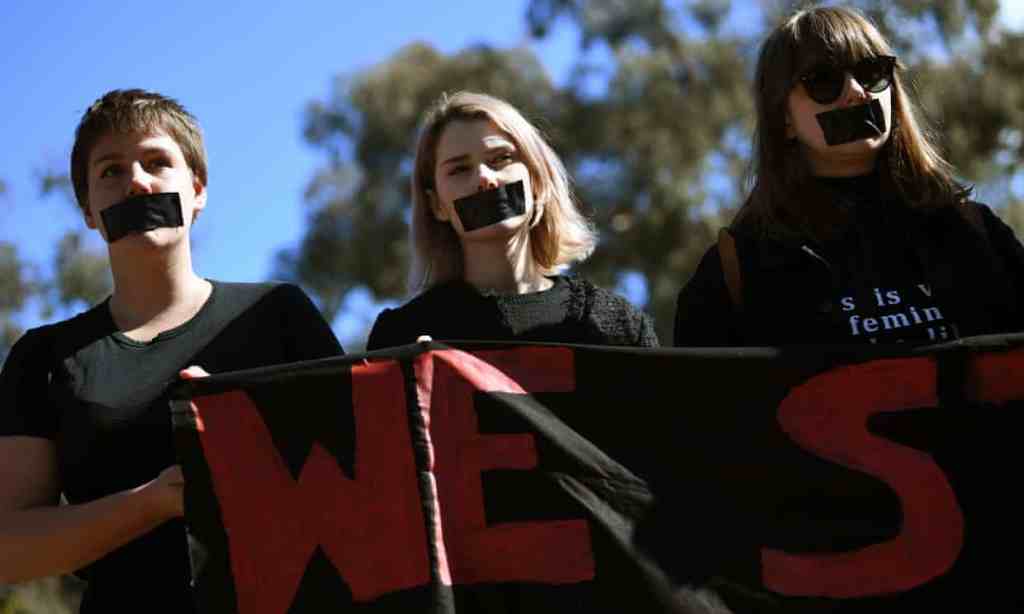
Photograph: Lukas Coch/AAP. [image] Available at: <https://www.theguardian.com/australia-news/2017/aug/01/sexual-assault-report-universities-called-on-to-act-on-damning-figures>
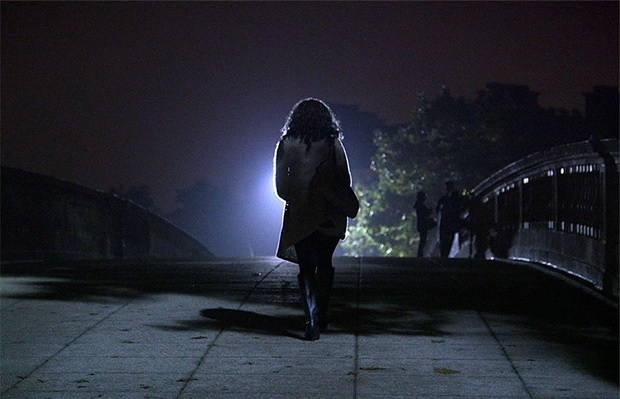
Sloan (2000) specifies in his analysis of campus party culture, that there are “hot spots” and “hot times” for crimes against women to occur, and students whose lives are characterised by partying with drugs and alcohol, are most at risk of violent and sexual crimes. Brantingham and Brantingham (1994) notes that while students use the campus at different times of the day and night for individual studies and classes, “nighttime activity appears to convert natural fear into fear of crime”. We also know that crimes occurring on University campuses are reported to police at even lower rates than in the general population. (Sloan, 1994)
Although we understand that the Human Rights Commission report unveils significant incidences of sexual assault in our Universities, we must realise that the findings are just the tip of the iceberg (Byfield and East, 2018). It is evident that more needs to be done in assuring the safety, and feelings of safety for students on University campuses.
The fears surrounding female student safety is a serious issue that can destabilise the core principles of higher education. If there is a perceived fear, real or not, from female students that spend time on campus alone, I will be deconstructing it in analysis and it’s effects. Safety on campus for all students is a crucial feature of the student experience, and no one should feel fearful, or be at risk of crime for trying to further their education.
Bibliography
AAP, 2017. Australian National University Students Protest After The Release Of A Survey Revealing The Levels Of Sexual Assaults And Sexual Harassment.. [image] Available at: <https://www.theguardian.com/australia-news/2017/aug/01/sexual-assault-report-universities-called-on-to-act-on-damning-figures> [Accessed 28 March 2020].
Brantingham, P. and Brantingham, P., 1994. Surveying Campus Crime: What Can Be Done To Reduce Crime and Fear?. Security Journal, 5, pp.160-171.
Byfield, Z. and East, L., 2018. SEXUAL ASSAULT AND HARASSMENT IN AUSTRALIAN UNIVERSITIES. Focus: Sexual Health, 25(9), p.42.
Jennings, W., Gover, A. and Pudrzynska, D., 2007. Are Institutions of Higher Learning Safe – A Descriptive Study of Campus Safety Issues and Self-Reported Campus Victimization among Male and Female College Students. Journal of Criminal Justice Education, 18(2), pp.191-208.
MBA Crystal Ball, 2017. Sexual Assault On University Campuses – Statistics And Facts. [image] Available at: <https://www.mbacrystalball.com/blog/2017/08/04/sexual-assault-on-university-campuses-statistics-facts/> [Accessed 28 March 2020].
McGowan, M., 2018. Universities Australia Tells Members To Act On Sexual Assault On Campus | Australian Universities | The Guardian. [online] Theguardian.com. Available at: <https://www.theguardian.com/australia-news/2018/jul/20/universities-australia-tells-members-to-act-on-sexual-assault-on-campus> [Accessed 28 March 2020].
Sloan, J., Lanier, M. and Beers, D., 2000. Policing the Contemporary University Campus. Journal of Security Administration, 23, pp.1-20.
Sloan, J., 1994. The Correlates of Campus Crime: An Analysis of Reported Crimes on College and University Campuses. Journal of Criminal Justice, 22, pp.51-61.
Zhou, N., 2017. Sexual Assault Report: Universities Called On To Act On ‘Damning’ Figures. [online] the Guardian. Available at: <https://www.theguardian.com/australia-news/2017/aug/01/sexual-assault-report-universities-called-on-to-act-on-damning-figures> [Accessed 28 March 2020].
 internet kid